


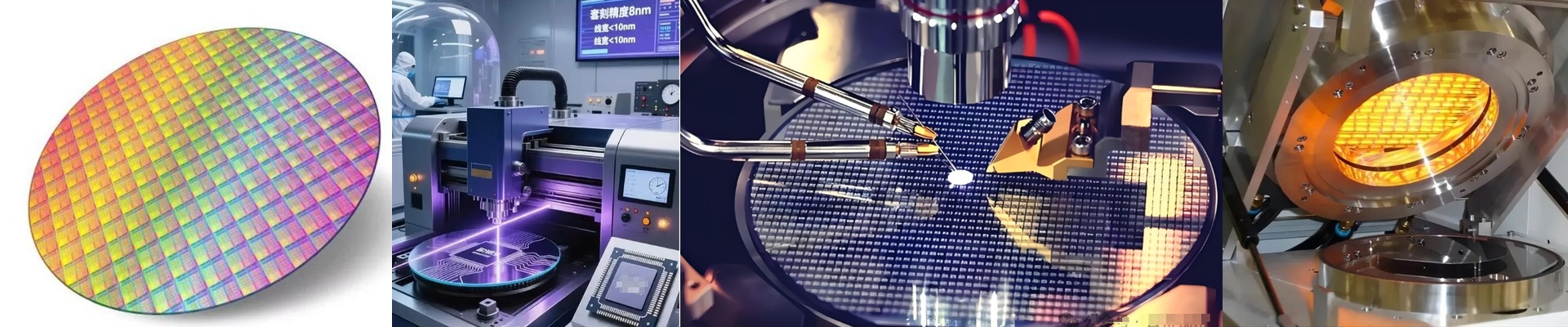

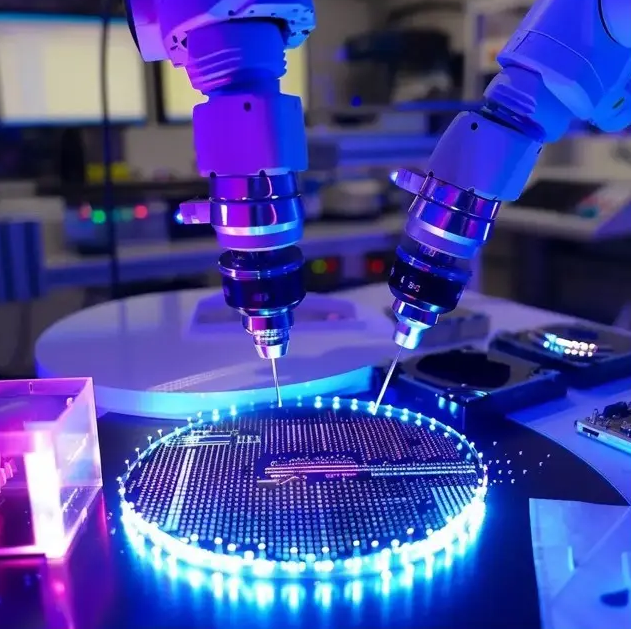
On the fab floor, polyimide curing isn’t just another thermal step. It’s a dimensional promise—one that ties your tolerances to temperature stability. If the bake profile drifts, stress shows up, dimensions wander, and yield takes a hit, right across lithography and the downstream patterning steps. You don’t just lose a batch when that happens. You lose schedule slack and burn cleanroom capacity you can’t afford to waste.
What matters under the hood
We build the curing system around repeatable thermal profiles and tight wafer-level uniformity, aiming for ±0.1°C across the substrate. Short-wave infrared heating dumps energy straight into the polyimide stack, so ramp times stay short while the chamber—and the surrounding tool—remains thermally steady. The hot zone is specced for Class 1–100 cleanroom duty. Materials and surface finishes are chosen to keep particle generation low and outgassing under control. Process control comes from calibrated sensors, closed-loop control, and documented recipes, so every run lands the same way—soft bake, hard bake, and cure.
Why it plays in high-volume fabs
With polyimide curing, the payoff is measurable: tighter thermal budget control, less scrap, and fewer rework loops. Repeatable bakes protect the photoresist and the underlying films, which keeps critical dimensions consistent. Shorter soak cycles and efficient heating cut energy use, and the platform is engineered for 24/7 ops—fewer surprises, fewer maintenance windows. The module is designed as an interchangeable thermal unit, aligned with international equipment interface norms, and validated to deliver equivalent performance and uptime.
The practical details you’ll run into
The module needs a clean, stable utility footprint—power, cooling, and exhaust—matched to the tool interface. Commissioning is part of the deal: you’ll lock down recipes, calibrate sensors, and map thermal drift for your specific stack. Carrier thermal mass and the emissivity of the polyimide film can shift ramp behavior. We tune the profile once, then document it so it transfers cleanly from line to line.