
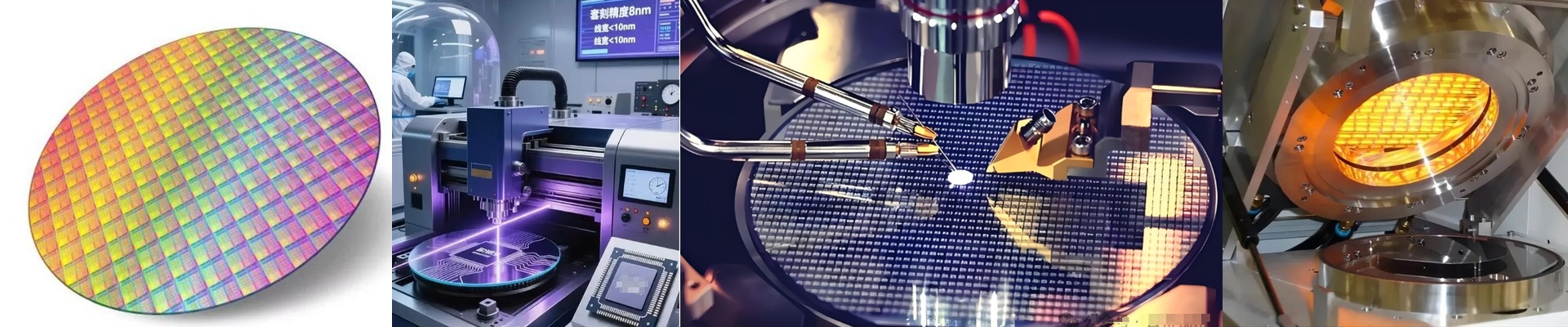
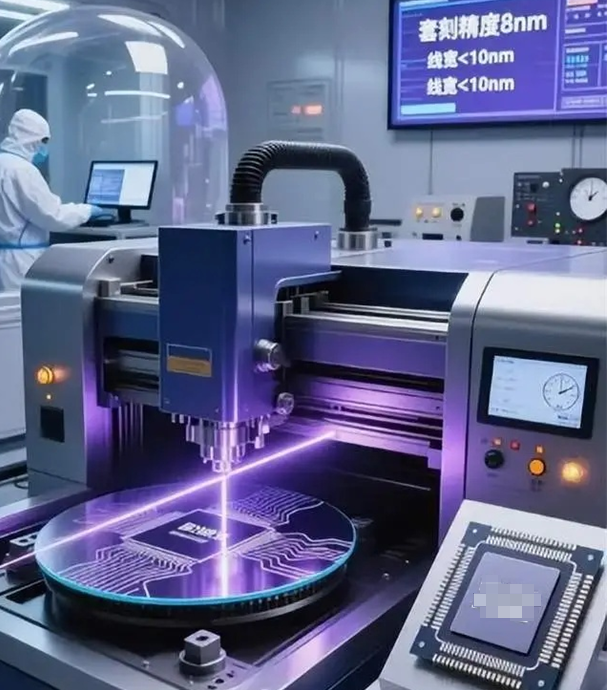
On the lithography floor, the gap between the lamp and the wafer isn’t a footnote—it’s a knob you have to set right. Get it too close, and you’re asking for thermal runaway, photoresist outgassing, and particle spikes. Back it off too far, and you’re chasing yield with not enough energy, longer bakes, and cycle time bleeding away. We build our heating modules around that distance, treating clearance as a primary process control. We run short-wave infrared with a quartz-halogen source and a carbon-fiber-reinforced emitter assembly. That gives you fast thermal response with low thermal mass. Across the active zone, wafer-level uniformity holds at ±0.1°C, and repeatability is anchored by closed-loop pyrometry at the hotplate reference point. The platform fits cleanroom Class 1–100, and the materials and seals are chosen to keep particle generation at zero during the bake. Soft bake and hard bake profiles stay in spec because temperature stays stable, even through door cycles and wafer exchanges. Here is the payoff on the line: critical dimension behavior stays predictable, scumming drops, and you see fewer rework lots. Energy use falls because the source heats on demand and cools fast—no idle thermal soak. Reliability shows up in the uptime logs: we’ve got units running 5,000+ hours with less than 5% output drift, and zero unplanned downtime traceable to the thermal module. Your schedule runs on chemistry and exposure, not on oven recovery. The module is compact, but you still need clearance for airflow and service. Plan 200 mm on the intake side. Integration is straightforward with standard flanges and 24 V interlocks, but the control profile has to be matched to your resist stack and substrate stack-up. Commissioning is short—just tune PID and emissivity compensation to match your carrier and process window.